Let’s chat about your email subscribers. It’s easy to get caught up in the numbers, just like with social media followers—how many do we have? But I like to focus on a different metric: open rate. This often-overlooked analytic can significantly elevate your email marketing strategy when you understand its impact.
The Mother’s Day Campaign: A Case Study
Let me share a recent example from a Mother’s Day campaign we ran for a client, a local distillery with a focus on local clientele. We sent out two emails:
- The first email went to our entire database.
- The second email, sent two weeks later, targeted only the highly engaged subscribers (those who opened and clicked the first email).
Here’s what happened:
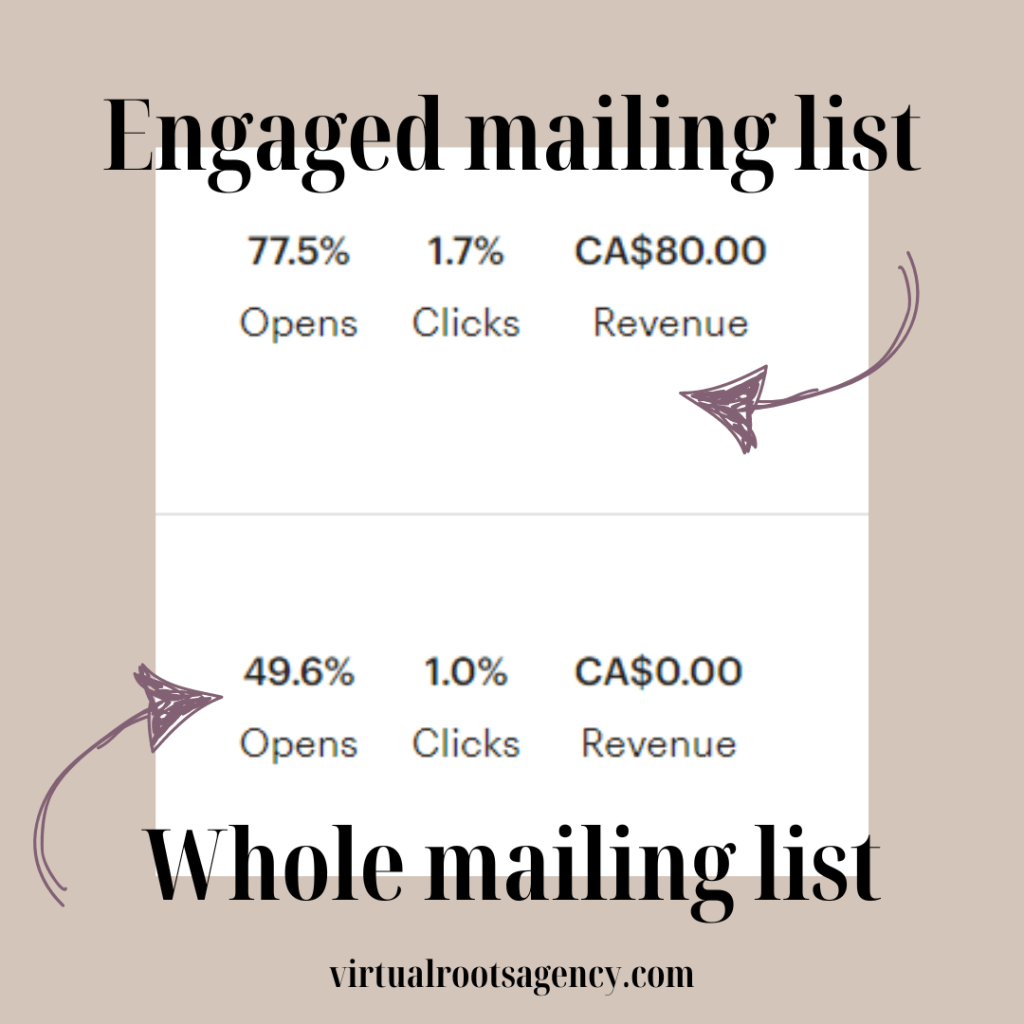
This highlights a common misconception in email marketing: it’s not just about the number of subscribers but about who is engaged enough to open, read, and click your links.
Engagement Over Quantity
This highlights a common misconception in email marketing: it’s not just about how many subscribers you have. What really matters is who’s engaged enough to open, read, and click your links.
My goal is always a 60% open rate because I believe in quality over quantity. Here’s why focusing on engagement is so important:
- Quality Over Quantity: A smaller, engaged audience is far more valuable than a larger, disinterested one. They are more likely to act on your emails, leading to better results.
- Personal Connection: Engaged readers appreciate personalized content, which helps to build stronger relationships. They feel valued and understood.
- Better ROI: Targeting those who are already interested can lead to higher conversion rates and a better return on investment.
How I Segment the Audience
For this particular client, we segmented the audience into three categories:
- 90-Day Interaction: Subscribers who have interacted with our emails within the last 90 days.
- 30-Day Interaction: Subscribers who have interacted with our emails within the last 30 days.
- Locals: Subscribers identified as local customers, based on their location data.
This segmentation allows us to tailor our messages to different groups based on their behavior and preferences. For example, we can send special offers to locals or re-engagement emails to those who haven’t interacted in the last 90 days.
How to Foster Engagement
To nurture your audience and keep them engaged, here are a few tips:
- Segment Your Audience: Tailor your messages to different groups based on their behavior and preferences.
- Provide Value: Ensure your content is valuable, relevant, and interesting to your readers.
- Call to Action: Include clear and compelling calls to action in your emails to encourage clicks.
- Test and Optimize: Regularly test different elements of your emails (subject lines, content, send times) and optimize based on what works best.
Final Thoughts
Next time you’re planning an email campaign, remember that engagement is key. It’s all about nurturing those who show genuine interest. By focusing on your most engaged subscribers, you’ll see better results and build stronger connections.
What’s your biggest challenge with email campaigns? I’d love to hear from you! Let’s chat in the comments below.

 Virtual Roots Agency
Leave a comment